Mechanism #25
Counterfactual Invisibility
Twenty-four mechanisms into this taxonomy, every entry has shared a feature: evidence that exists but is wrong. Distorted by incentives, dissolved at scale, suppressed by industry, fossilized in precedent, cannibalized by the metrics meant to track it.
This mechanism is structurally different. The evidence for the correct answer cannot exist — not because someone hid it, but because success produces nothing to observe. A drug that prevents a heart attack looks identical to a heart attack that was never going to happen. A bridge that doesn't collapse looks the same as a bridge that was never at risk. Prevention that works is indistinguishable from a threat that was never real.
The system can only learn from its failures. And that creates a loop.
The Prevention Paradox Loop
The Asymmetry No One Audits
"In all of FDA's history, I am unable to find a single instance where a congressional committee investigated the failure of FDA to approve a new drug. But the times when hearings have been held to criticize our approval of new drugs have been so frequent that we aren't able to count them."
David Stewart, head of medical oncology at the University of Ottawa, quantified what lives in that silence. Analyzing 21 cancer therapies across 10 tumor types in phase III trials from 2001 to 2015, he found that every hour of regulatory delay in North America costs 29 life-years. One life-year every two minutes. Globally: one every fourteen seconds. The cumulative toll between drug discovery and approval for those 21 drugs: 1,020,900 life-years.
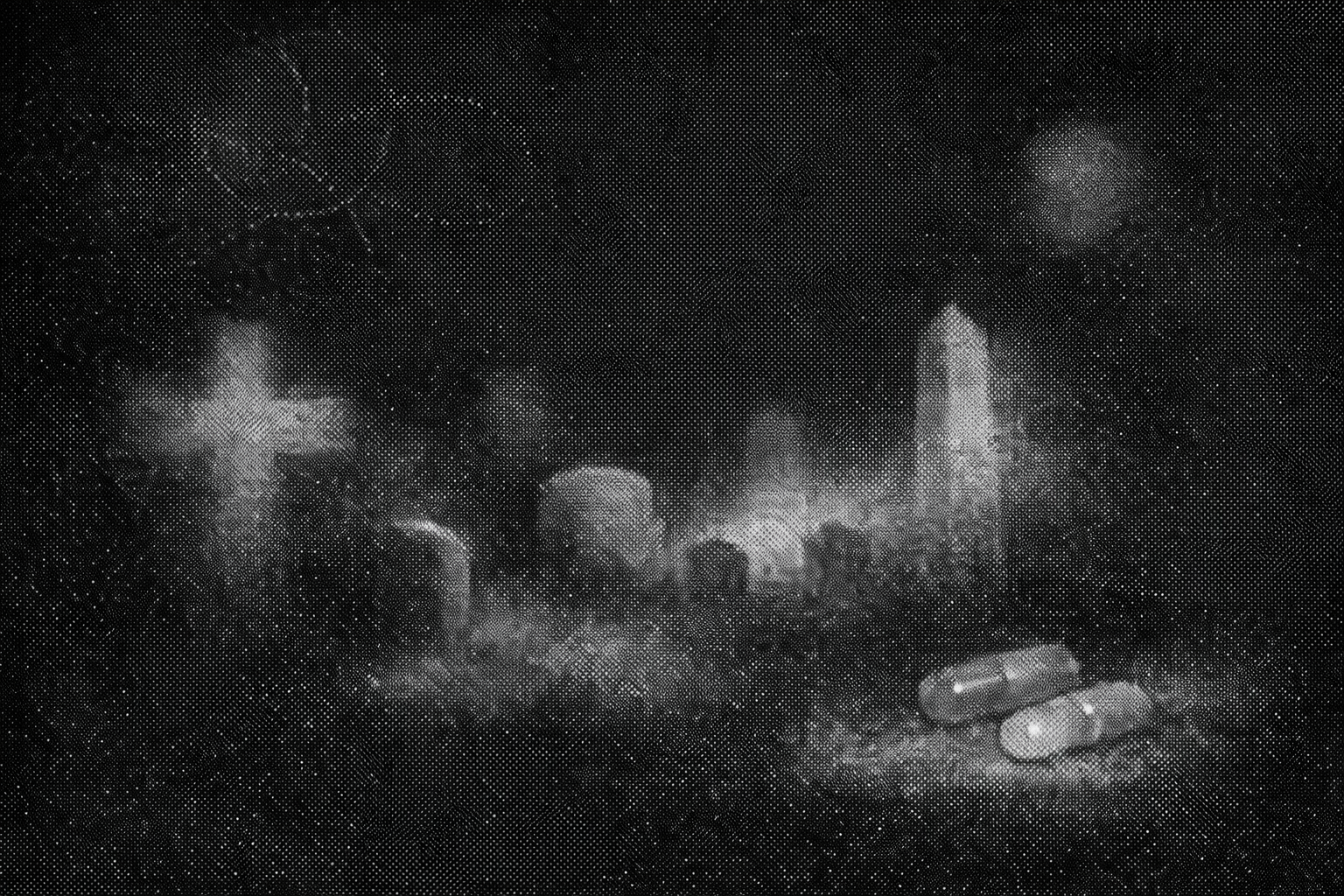
The economist Alex Tabarrok, amplifying a term coined by Bart Madden, gave the asymmetry a name: the invisible graveyard. Approve a bad drug and there are identifiable victims, media coverage, congressional hearings. Fail to approve a good drug and people die — but the bodies are buried in a graveyard no one visits.
Beta-blockers. Available in Europe by 1967. The FDA blocked U.S. access. When the agency finally reversed course years later, it announced the drug could prevent 17,000 heart attack deaths per year — unwittingly admitting that its own moratorium had cost approximately 100,000 lives.
The Paxlovid case is more recent and more absurd. Pfizer's antiviral trial for COVID-19 was paused because continuing to give patients a placebo was deemed unethical — the drug was working that well. The FDA then blocked public access to available doses for 48 more days. The drug that was too effective to ethically withhold from trial participants was withheld from everyone else.
As of March 2026, CNBC reports the FDA is hemorrhaging experienced review staff. Accelerated drug approvals dropped from 20 in 2024 to 9 in 2025. Former Commissioner Scott Gottlieb noted: "You're seeing the effects of the loss of experienced review staff play out." The invisible graveyard is filling faster right now, and the mechanism ensures no one will count the bodies.
The Same Loop, Seven Domains
Public Health
Harvey Fineberg, president of the Institute of Medicine, wrote in JAMA in 2013 that prevention is "celebrated in principle, resisted in practice." The reasons are structural: success is invisible, it lacks drama, statistical lives carry little emotional weight, and avoidable harm gets accepted as normal. Tom Frieden, former CDC director, put it concretely: "We can't see the 9,000 annual hepatitis B infections that universal vaccination prevents."
The spending reflects the seeing. The United States allocates 0.5% of GDP to preventive care. It allocates 10.4% to curative. Public health receives less than 3% of the $4 trillion national health expenditure — and the share is declining. Geoffrey Rose identified the structural reason in 1981: the prevention paradox. Most cases of disease come from the moderate-risk population, but prevention for moderate-risk individuals shows little individual benefit even when population benefit is enormous. Each baby vaccinated against hepatitis B gains small individual protection. Vaccinating all babies prevents thousands of infections. The gap between "small for me" and "enormous for everyone" is where political vulnerability lives.
Y2K
The world spent $300–600 billion on Y2K remediation. Midnight arrived. Nothing happened. The public concluded it had been a hoax.
"We're victims of our own success," said John Koskinen, the White House Y2K czar. Skeptics pointed to Italy, Russia, and South Korea — countries that barely prepared and also saw no catastrophe — as proof the whole thing was unnecessary. The nuance they missed: the heaviest remediation targeted the systems most likely to cause cascading failures — banking, aviation, defense, power grids. Countries with less complex digital infrastructure had less to fix, not less to fear.
Y2K is the textbook preparedness paradox. Because prevention worked, the absence of visible harm made the threat appear exaggerated. The more successful the intervention, the less real the danger seems in retrospect.
Infrastructure
The United States has accumulated $105 billion in deferred road and bridge maintenance. Twenty states don't mention deferred maintenance in their capital budgets. The cost is literally absent from the numbers.
Then a bridge collapses. Pittsburgh's Fern Hollow Bridge, January 2022: the NTSB found that every inspection from 2005 to 2021 had noted holes in the steel legs. Maintenance was not performed. Ten injured. Minneapolis, the I-35W bridge, August 2007: rush-hour collapse. Thirteen dead. The NTSB warned that 10,000 bridges nationwide face similar risk. Maintenance is, as infrastructure analysts put it, "a convenient place to cut corners when politicians need to appear tough on spending, since the results of routine upkeep are not flashy."
Maintained bridge: invisible success. Collapsed bridge: front-page investigation. Only 3 of 50 states disclose the estimated cost of deferring maintenance in their budget documents.
Military and Intelligence
Ward Wilson, writing for the Nonproliferation Policy Education Center, offered the garlic-and-vampires analogy. A man wears garlic around his neck to ward off vampires. No vampires have attacked him. Does the garlic work? The objective observer might be skeptical. Applied to nuclear deterrence: the claim that nuclear weapons prevented great-power war for 75 years is structurally unfalsifiable. The trillions spent on deterrence can never be empirically validated — because the evidence for success is the absence of the event.
Intelligence agencies face their own version. Richard Betts documented the paradox: when intelligence warns of an attack and prevention succeeds, the adversary cancels — and the warning is retroactively classified as a false alarm. Michael Handel formalized the risk paradox: the riskier a surprise attack appears, the faster it will be dismissed as unlikely, making it less risky and more likely to succeed. As former CIA director Michael Hayden put it: "If it is a fact, it ain't intelligence."
The TSA crystallizes the mechanism. The $900 million SPOT behavioral detection program detected zero terrorists. DHS agents failed to stop prohibited items in 95% of internal tests. Yet the actual security improvements — reinforced cockpit doors, federal air marshals — are, as former TSA head Kip Hawley described them, "dynamic and largely invisible." The visible security is theater. The real security can't be seen. Meanwhile, a Cornell study estimated that TSA-driven flight avoidance pushed travelers onto highways, causing roughly 129 additional car deaths per quarter — equivalent, as Nate Silver calculated, to "four fully loaded Boeing 737s crashing each year."
Cybersecurity
The better the security program, the less visible its value. A successful CISO produces no breaches, no ransomware, no data exfiltration — and no evidence of why millions were spent. The invisible protection paradox: success is indistinguishable from the absence of a threat.
Disaster Risk Management
"Success in disaster risk management means nothing happens," states the UN Office for Disaster Risk Reduction. The sector is chronically underfunded because its best outcomes are politically invisible. The loop completes: prevent a flood, lose funding for flood prevention.
The Other Graveyard
If this post ended here, it would be dishonest.
The invisible graveyard has two sides. Vioxx — Merck's painkiller, approved through an expedited process — caused an estimated 139,000 heart attacks, with fatality rates up to 40%. Welfare costs: $32–232 billion. The speed that would have emptied one graveyard filled another.
Montazerhodjat and Lo at MIT showed that the standard statistical threshold for drug approval — a 2.5% Type I error rate — may be appropriate for conditions with existing treatments but is "deadly caution" for diseases like stage IV pancreatic cancer, where five-year survival is 1%. The right threshold depends on which graveyard you're willing to fill.
The mechanism isn't "approve everything faster." It isn't "regulate more cautiously." The mechanism is that the system structurally cannot see both graveyards at the same time. The bodies from a bad approval have names, faces, lawsuits, congressional hearings. The bodies from a delayed approval are statistical, counterfactual, invisible. The asymmetry in visibility biases every decision in the same direction — not because the decision-makers are wrong, but because the feedback they receive is incomplete by architecture.
| Domain | Visible (gets investigated) | Invisible (never investigated) |
|---|---|---|
| Drug regulation | Bad approval → hearings, lawsuits | Delayed approval → 29 life-years/hour |
| Public health | Disease outbreak → media, emergency funding | 9,000 infections prevented → no story |
| Y2K | "Nothing happened → waste of money" | $300-600B prevented cascading failures |
| Infrastructure | Bridge collapses → investigation, funding | Bridge doesn't collapse → budget cut |
| Military / intelligence | Attack succeeds → 9/11 Commission | Attack prevented → "false alarm" |
| Cybersecurity | Breach → front page, CEO fired | No breach → "why are we paying for this?" |
| Disaster management | Disaster strikes → emergency declaration | Disaster prevented → budget cut |
What Makes This Different
Every prior mechanism in this taxonomy involves visible evidence being mishandled. Definitions get manipulated (#1). Methodologies create findings (#2). Incentives amplify falsehood (#3). Industry suppresses evidence (#4, #16). Proxies cannibalize the outcomes they measure (#24). In every case, the evidence exists — it's just wrong, distorted, or buried.
Counterfactual invisibility is the first mechanism where the architecture of observation itself creates the failure. The evidence isn't wrong. It isn't suppressed. It cannot exist — because it is evidence of things not happening. You cannot count the heart attacks that didn't occur, the bridges that didn't collapse, the wars that weren't fought, the infections that never spread. The absence of data is the mechanism.
Frédéric Bastiat saw this in 1850. He called it "that which is not seen" — the costs and consequences of unchosen alternatives that vanish from political analysis the moment a decision is made. A hundred and seventy-six years later, the systems that allocate trillions still cannot see it. Not because the insight is obscure. Because the structure of human attention — drawn to drama, narrative, identifiable victims, visible suffering — is the one variable no institutional design has overcome.
The invisible graveyard doesn't need anyone to lie, suppress, or distort. It fills itself, in silence, by architecture.